Showing posts with label glitch. Show all posts

Tuesday, 15 March 2016

Breaking Pictures - Pixel Portraits


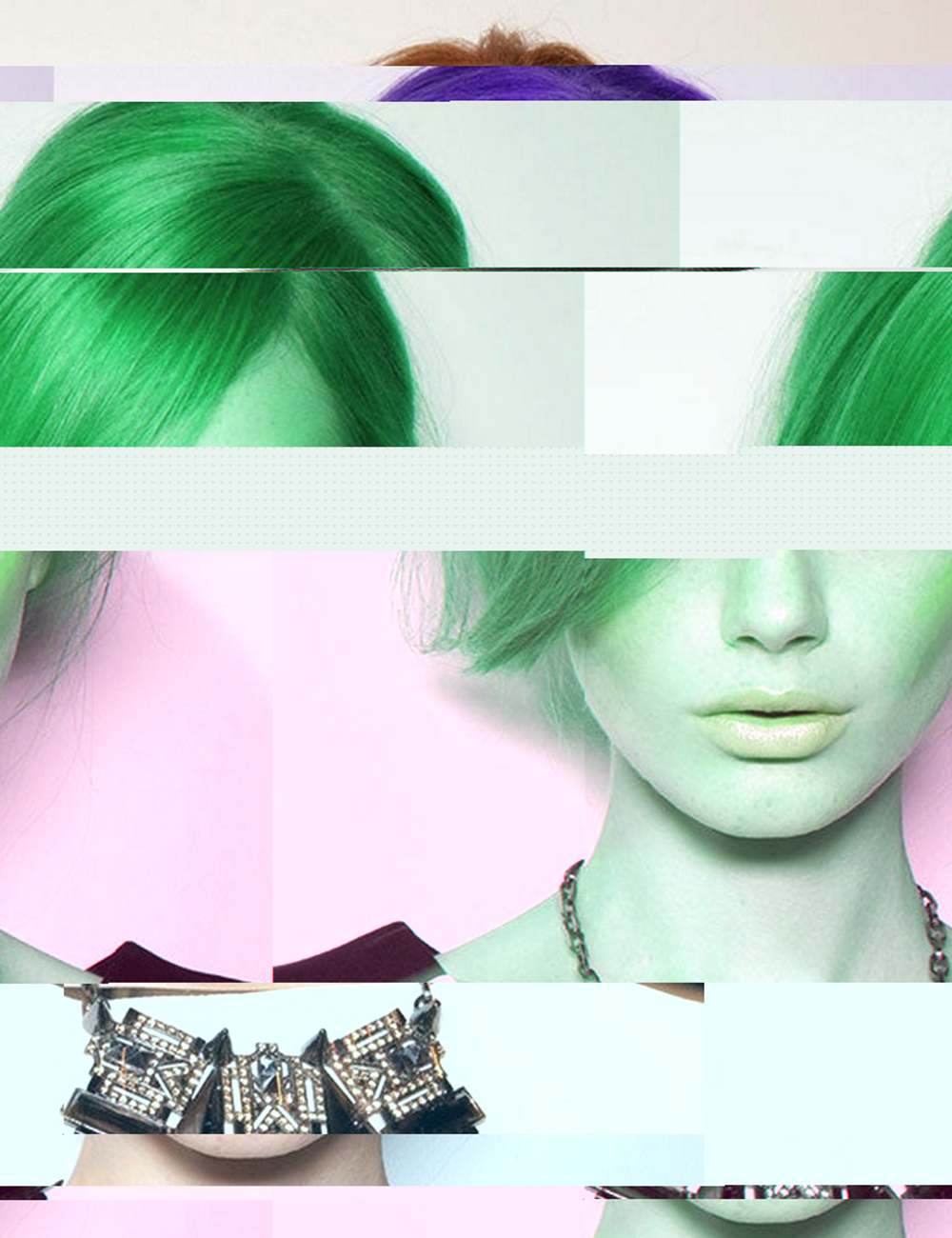
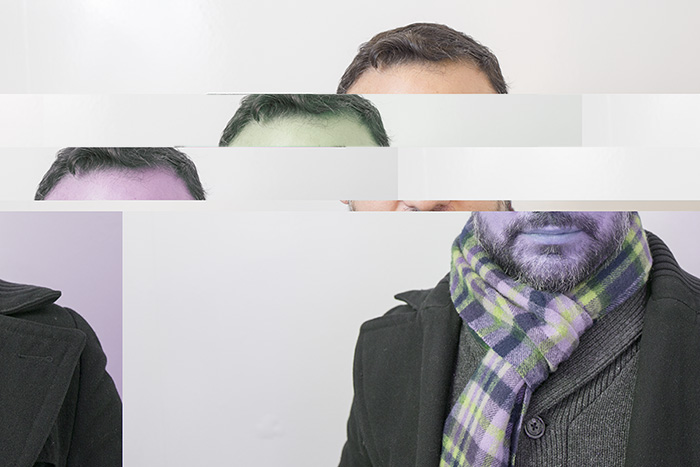
I'm interested in how digital images are really algorithms, working with code. This code could be interpreted in multiple ways - a song, a video, an image etc. It's just one and zeros existing as electronic impulses on a memory cell that has no connection to a photographic scene until it is read and interpreted by the computer.

This is all very cold and inhuman, so I thought it would be good to "flesh" it out by combining this with portraits. The initial portraits are quite neutral ( flat, even light, face to camera etc) which I hope will simplify (or rather, not complicate) people's responses to what they see. I'm not interested in any particular person, as much as how people/things/scenes are artificially constructed in a digital world.

With the techniques I've experimented with, for me it feels I should use either black and white portraits with the solid colour pixels or the colour portraitist with the blurred pixels. I don't know if it's clear but the pixels are actually from the portrait - if you blur your eyes you can see the features underneath.


Viewer’s response
After showing these to some colleagues, it's interesting to see that my intention was to focus on the break in the digital photographic medium rather than the subject of the image, but of course when you see a portrait you become interested in the person, what's hidden, what's revealed etc and your thoughts go to identity, representation etc. So, I either need to think that side of things through more, or choose a more "neutral" image - a bland landscape for instance. Actually, I think I will try both of these.

It's useful to see how I might have one thing in mind but then to find that others read different things into what I'm doing. It gives the image complexity but it also makes me realise that once it's created and out there I have no control over it and how people respond to it.

Friday, 5 February 2016

Breaking Pictures - Deliberate Glitches 2

Continuing on from my attempts to deliberately break or glitch images I've been looking at how digital files are downloaded and what happens when some of the data is missing. Torrent sites host illegal downloads of movies, software, music etc and the idea is that when users have downloaded a file they then "seed" this to other users. Each seed offers smaller parts of the whole file and each part comes from a different computer in a different part of the world. It's all part of the ever increasing deluge of data pinging around us at all times.

It's an interesting idea that one file, or more specifically one image could be made up of smaller parts from anywhere in the world. Of course, when you look at the image it is identical to any other digital version of the same image. So in order to highlight this process, I thought I would try downloading ("leeching" in torrent terms) a series of images and then halting the process half-way through - when there is enough information to open the image but but not enough to complete it. 

The result is something like this:

Being a torrent site most of the images available were pornography. My interests aren't necessarily in the  rights and wrongs of this, but with what makes the image in the first place. The stuff under the hood. I settled for a folder of images of women with at least some clothes on. I think the glitches make the final image more suggestive than the original.


I then took this one stage further and added some additional code glitches (see previous post for more on this) just to finalise the image. 


  See more of my work at www.marktamer.co.uk

Monday, 1 February 2016

Breaking Pictures - Deliberate Glitches

I've been manipulating the inner workings of images for a while. Essentially, it's a digital image that I have opened up in a hex editor, changed the code around and then resaved. For these portraits I thought it would interesting to add something personal from the sitters. So, after I'd photographed each person and loaded the image onto the laptop, I asked them to name a favourite song. I then cut and pasted the lyrics from their song straight into the code. Resaving the file then causes the image to "break." the results are quite unpredictable, which is part of the appeal. 


This is what the code looks like using a hex editor.


See more of my work at www.marktamer.co.uk